Japan: The Sun that does not know Dusk.
In America (I mean the continent) the most common perception of Japan is of a highly-developed and high-tech country with a similarly described society. Japan is seen as a rich country that has exported to the world high quality products, technology being the most common one. The part of cultural products also made Japan to be known everywhere thanks to anime and movies from Hayao Miyazaki who, besides of entertaining in a very different way that Disney does, Miyazaki shows us values from a very different perspective: theirs.
Japan has given the world many valuable lessons, before and after World War II. I am absolutely aware of the delicate and tough history held in Asia about the cruel acts perpetrated by the Japanese Army during all phases of World War II in Burma, Korea, China, Philippines, etc. therefore this entry considers the positive contributions of Japan as country to the world and also justifies from a non-Asian's point of view, why Japan is an example to the world, for they have fallen many times in their history and like the sun, they rise and shine in the end. I would like to clarify that I do not, by any means, justify the atrocities made during World War II, however I do have something to comment about the behaviour of some countries (particularly China and Korea) by using these memories as foreign policy (and even as coercitive) measures towards their relations with Japan.
A large island, whose location and its character of a country with few resources could have been condemnded to be a developing country. Japan was aware of its tiny potential of having local resources, therefore since the Meiji Restoration, they were aware of the fact that to grow, you need resources, and sometimes to get resources you need to use force. Japan and Germany were of the very first countries who used greopolitics as a line for designing both foreign policy and war strategies (technically, the United States still does) and, this is pretty much why Japan's invasion from all the eastern side of Asia was given in such agressive way, they needed more access to the sea, more raw materials, in few words, they wanted more influence on the continent. Japanese strategy was succesful, because in the end, it took an alliance of around ten or more countries and a couple of atomic bombs to achieve Japanese rendition.
This is the first lesson Japan (and Germany too) taught to the rest of the world: You can get resources but not through force, and also force cannot be used as means to get the influence you would like to have, for consequences can be seriously damaging for your own population. A remarkable part about Japan's way of conducing itself in terms of strategy showed that sometimes it is not a matter of how many soldiers or weapons you have, but of strategy. In my view, throwing the atomic bombs was a measure for 'being sure' of Japan's rendition.
The part of where extreme ideas can lead countries constitutes a very important part of these valuable lessons about war as means that do not give any benefit to the country that wages them, both countries are losers on the long term. The case of Hiroshima and Nagazaki are also the living proof of the fact that it just takes a bit of a superpower's prepotence and the lack of respect for life (and also the use of selective deafness when scientists are warning you about the use of nuclear weapons) to win a war by ignoring all principles of life itself.
After the war, Japan ended up destroyed in all senses: physically and strategically but most importantly, emotionally. Japan really got defeated not precisely after Hiroshima and Nagazaki were disappeared from the map but after Japanese people's morale was shattered into pieces when the Allied Forces humilliated the Emperor and made him to accept defeat in public. Japanese officials, along with many others including civilians, who could not stand such humiliation, used legacy of the Bushido Code through suicide. Japanese people are of the few on this world who keep loyal to their principles and values, thanks to this loyalty and to the strong belief in the emperor and their institutions, Japan had the potential to wage such a huge war and to lose it with honour: 'Better to be dead than surrender to the enemy'.
Japan got isolated once again and closed itself. Then around the 90s, Japan got into the map again with a powerful economy and a restored morale. Principles of honour and the importance of tradition are two among the many aspects that made Japan recover in fifity or so years. Japenese people were also aware of the importance of unity as an essential element for their country to recover and to grow. This unity is noticeable in most public policies, such as support for companies and the reform that is yet to be consolidated in what respects to gender equality.
It is true that Japan's past constitutes a very heavy legacy that has made them acquire enemies for free. Anyway, Japan has been giving help and investment to all the invaded countries and also, China and Korea should not forget that some of the good quality infrastructure they have was made and later left there by the Japanese. These communication and transport networks work efficiently in most cases. Japanese legacy does not limit to infraestrcuture only.
Koreans have a unique character, different to the rest of Asia, for they were under both Chinese and Japanese domination. After spending a while living with Koreans, I can tell the difference of what comes from where. Koreans are honest and hard working and, most of them have a very clear concept of honour and tradition, as well as little tolerance for mistakes and a strong historical memory. Suicide is very common in Korea, however it is not taken as seriously as it is in Japan. In my view, these positive things Koreans have were strenghtened by Japanese domination, for all of the aforementioned characteristics can also belong to the Japanese character. My critiques towards China can be read elsewhere in the blog.
Something that called my attention in Japan was the fact of modernity and tradition getting along very well with each other. For example, Osaka is a huge modern and highly developed city but, it also has some secret places in which one can get a glipmse or just look deep into the past of Japan and its tradition, such as Shitenno-ji Temple. Japanese are proud of it and gladly share it with foreigners, this is why cities like Kyoto are appreciated and loved worldwide. Kyoto and Nara are another example of modernity in harmony with tradition because both cities are traditional in the sense of preserving temples and legacies or traditions(such as the 'maikos' speaking in the local dialect of Kyoto). Tokyo is modern also but when one enters Asakusa or Sensoji Temples, then a glimpse of the past and tradition come again.
In this respect of tradition as something deeply embedded in Japan, values are something that has made Japan to rise again every time they have fallen. In a different way, apart from wars and economic crises, Japan also suffers from really strong earthquakes, tsunamis and also hurricanes. In the horrible earthquake that hit Japan in 2011, the images of destruction could be seen but also the images of restaurants opening and giving food to all people around and, also of people helping. Japanese people,besides of having a good culture of what to do in an earthquake (which few countries have and Mexico proudly has it) or in a tsunami, they act on the collective level instead of the individual one. The way Japanese people act in case of emergency, talks about the high level of public and national conscience they have in the country, which is inherent to their identity.
The case of Fukushima was unexpected, and it has the potential to be of the most severe cases ever seen since Chernobyl and it now poses an embarrasing and hard challenge for the Japanese government which has been under tough criticism since the accident. However, most critics do not take into consideration that there is not much to do against natural disasters (nothing made by humans can stop nature, we should not forget that), and that not only Japan but any country with nuclear plants has the same risk of having an accident and that we all are to blame for the current situation with the environment.
Japan, as shown above, in my very personal opinion, deserves both admiration and respect as a country and Japanese people can teach really valuable things about tradition and modernity, values and the importance of identity and honour not only to the neighbours but to the international community in general. Japan did commit crimes during the war...but actually no superpower on this world has ever behaved ethically along history. I have a last personal observation: the only country in Asia (and most likely on the world...) that has been able to challenge and put coercitive measures on China has been Japan, why do you think that is?

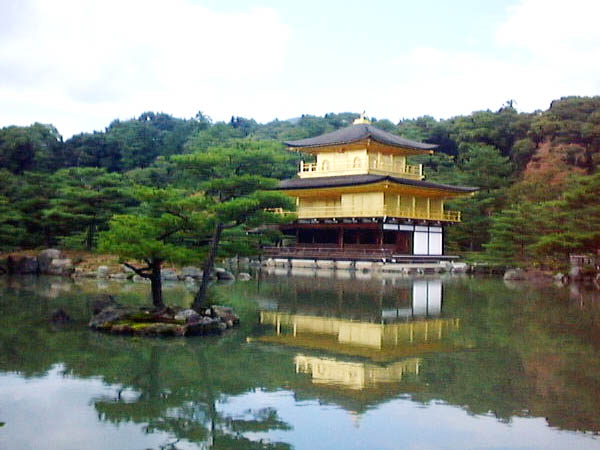 |
| Golden Pavilion, Kyoto |
 |
| Tokyo: contrast of modernity and tradition |


Comentarios
Publicar un comentario