Drones and Spies: Are Sovereignity and International Law disappearing?
Since the scandal derived from Snowden's leaks of important documents after his fleeing from the National Security Agency and also after the NSA itself has been exposed by the whole world (mostly by Chiefs and Heads of State), the international community now faces new challenges that go beyond national security. It now comes to the world's attention that they have to reserve their secrets to themselves, because as the German Chancellor Angela Merkel said, 'Friends are not supposed to spy on each other'. If countries cannot even trust their allies, then what will come next?
The fact of drones going around the world falling either in the middle of nowhere or falling in small towns or provinces killing people has very strong implications and at the same time, it rises new questions regarding the concepts of sovereignity and it jeopardizes the existence and observance of International Law. The new problem of the NSA spying on everybody and drones falling here and there, somehow present a threat to the international community. The worst problem is, that those who send these drones or spy on everybody have the argument their actions for the sake of their national security or, those who are a bit more cynical, argue that it is in their national interest to know what the international leaders are doing.
In this entry, I will attempt to analyse the implications of spies going here and there trying to gather information about countries (and about those who govern them) and what implications this could have in the nearby future, particularly in the matters of cooperation, negotiation and agreements. The other part I will include is about drones, which now have become the new trend for solving matters that have to do with national security and, I will use the examples of Pakistan, North Korea and China. In both cases, I will include an analysis of the implications for sovereignity and International Law, which are both put into question thaks to recent events. I am absolutely aware of the fact that these are complex issues and therefore, I am not going to include every single aspect about these matters in this entry, because there are several points of view about these topics.
The first issue to be discussed here is the need of the NSA and other intelligence agencies to spy and know everything about everyone around the world. It is true that thanks to globalisation and the never-ending movement of people and information constitutes a risk for countries in what respects to security. Since borders are now merely lines that separate one country from the other due to new communication and transport technologies, now it is very easy to know what is going on around the world within a 'clic' of distance.Unfortunately, objectives are not the same and sometimes information can be used either in favour of positive things (such as trade, commercial or any other type of agreement) as well as for negative actions, such as terrorism.
There are two things that are particularly relevant here. First, it is of common knowledge that every action has a reaction, therefore if there is a large history of good or bad relations between two or more countries, then it is natural either to trust deeply in that country or on the opposite, to be reserved in certain issues that could affect all parties. History plays an essential part here, because if the parties had problems in the past then it would be natural for them to feel mistrust towards either other country, or simply put, even be suspicious of what the neighbours are doing. Now, the thing is that if some countries had good relations and even unbreakable alliances, then it is not logical at all to be spying on the allies, it would be good to wonder about Germany spying on Japan during the 1930s or about China spying on North Korea. the fact of the United States spying on Germany shows that mistrust is now a disease the US has been carrying since 2001 or maybe even before.
It is true that all countries are concerned with national interest and also with national security; there are different kinds of threats, however. It is ridiculous to claim that Germany or Japan have to be looked at just because of their previous acts during WWII or, to claim that all Islamic countries have to be looked at just because for the sake of having Muslims. Terrorism is an international threat that does not only affect to the United States, it also affects Pakistan, Japan, Russia and elsewhere. The problem here is, if any country is willing to accurately try to target the problem of terrorism, then the very first place into which they should take a look is at home. The best example of this is what happened in Boston because it is illogical that after taking measures against Afghanistan, Iraq and throwing drones in Pakistan, the US gets another attack at home which was perpetuated by a couple of people who have been living there for more than fifteen years (Russia did warn the United States about these people, though).It is always easy trying to blame other countries for our national problems, but being self reflective is a must when the State is concerned with national security. Getting into Afghanistan and Iraq did not change what happened in Boston and, if the State wishes to be more accurate, there has to be communication with other agencies. If there is a lack of trust, then how is cooperation or agreements going to happen?
We should not forget that in what respects to international matters, two or more heads can have a better proposal for solving a problem than only one. Here comes the importance of having an adequate strategy in order to target a problem, and it is of military science principles that you cannot have the same strategy for solving every problem you have concenring national security, it has to be modified once in a while according to circumstances. If there is a lack of trust and of a clear strategy, then intervention or any other kind of action in order to solve a problem, results counter productive.
This idea of actions to solve a problem leads to the issue with drones. First, this is not the first time in human history in which we are having a programmed murder or some idea of killing or targeting something or somebody from a distance. There have been previous programmed killings, such as Stalin sending killers for Leon Trotsky or when dissenters were chased anywhere during the period of WWII. The thing today is that now thanks to radars and technology, it is not even necessary to move away from home, because now one can plan, send it and control it from one's country. The fact of some countries using drones either to spy or to get rid of somebody out there constitutes a crime and it technically violates both international law and sovereignity.
The discourse of respect comes in the middle of the issue with drones,not only because of the part of putting human lives into danger, but also because sovereignty is an inherent part of the international system that somehow puts some order and limits in what respects to interactions between states. Sending drones to take a look into what happens in the country is not the solution for gathering information and also for solving a national security concern, or it can actually be a solution but with very severe consequences, such as mistrust and even reactions. What if those who send drones find other drones from their counterparts spying on them? This would generate a never ending conflict. Let's remember how this meant success or failure during the Cold War, in which Communist spies were here and there, and the US was pressuring some governments around the world for taking some actions against the spread of communism.
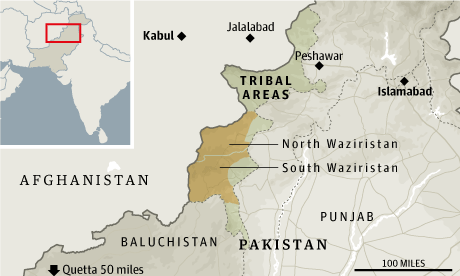
The best way to solve problems is (yes, it will sound like a cliché) putting the parts face to face, which is what will be done in the end. Now, if the problem goes beyond their control or their borders, then cooperation is still the best thing to do, because if one country sends the drone to the other without the latter's previous knowledge, then mistrust and anger might come. Unilateralism is the worst enemy of cooperation. What happened in Pakistan some days ago in which a Taliban leader was killed by a drone, instead of being celebrated is being condemned by Pakistan, because obvisouly they have no knowledge about where and when the drones are flying so, killing this person, instead of having a positive outcome it might have a negative one in the peace talks Pakistan was about to have with the Taliban. The fact of the US believing that their interest is equal to the world's interests, then we indeed have a communication problem.
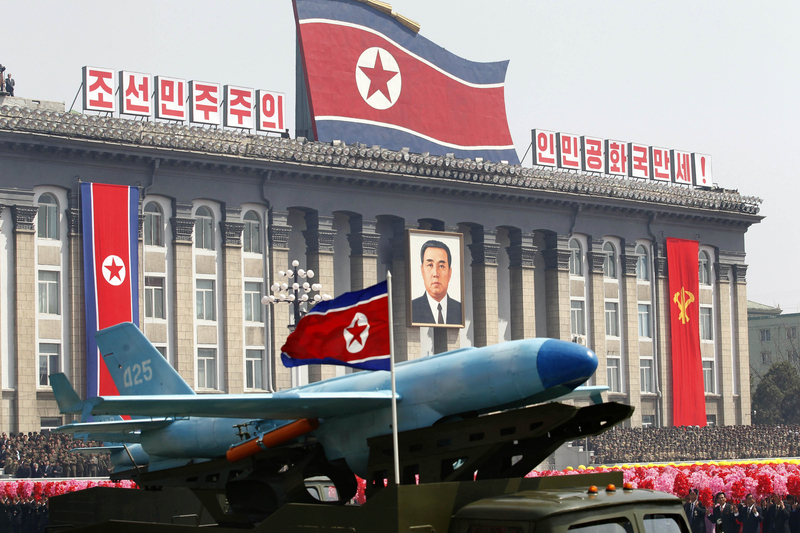
There are other cases in which it is just impossible to extract information and it is the case of North Korea. Since there has been a big suspicion about their Uranium programme and about what they are doing with the remaining Plutonium, then it is better to try to find out what is happening with this but, pressuring, putting sanctions and threatening them does not make any difference at all (besides Kaesong Reactor is still turned off and as far as I know, it is still not working) North Korea's attitude, rather than being something that came all of a sudden, it was provoked by the presence of the US in South Korea and also for the latter's inability to solve the 'Korean question' by themselves without the help of the US. Sometimes trying to please the other's interests might harm national interest as well. In this case, it is a matter thar remains in Seoul to solve and, if China and Russia are leading Pyongyang into common sense, then it is not really necessary to send drones to North Korea. Let's remember that one thing is having the bomb, and the other is to use it (and being sure of it working). The problem of making suppositions about what North Korea is doing is an angry Japan, an uncertain South Korea, an angry China and a concerned Russia. The least China and Russia want is having the United States nearer than what they already have them.
China has also been sending drones to Senkaku Islands, which are being disputed by Japan as well. The fact of some approaching and others trying to intimidate through actions makes the whole issue a time bomb. Prime Minister Abe is being serious about his policy about improving defence capabilities for Japan and, since the only country who has dared to answer to China in a strong way on the whole world has been Japan, then one might conclude that Tokyo is not joking about the use of force. Drones then, when used for spying or for intimidating or simply put, when sent to other countries, cause more problems than solutions.
They might be useful but for tracking specific actors inside countries, because when trying to locate places or people involved in things like smuggling or when trying to trace drug routes, drones can be of great help.
Today then, the international community has the new challenge of whether choosing to follow their national security objectives in a unilateral way, or also try to follow national interest but through cooperation. The NSA is not the only spying agency around the world, we should remember that Russia has its own and even the United Kingdom therefore, as long as national security priorities (before getting outside and blame another place for national problems, one should first look inside) are not clearly defined, then it will increasingly be hard to determine challenges on the international security agenda. Intervention in internal affairs is a very delicate issue and it constitutes a crime for most countries, actually in many countries foreign intervention is not regarded as something at all positive. Changing or attempting to modify national agendas in order to suit other's interests can result counterproductive, moreover if the other's interest are detrimental on the country's priorities.
The other side of this is human consequences. People cannot be killed just for the sake of a government's national security priorities, moreover if we are talking about a foreign government. The fact of spying on another government or sending drones to another country, apart from constituing a violation to sovereignty and international law, it also constitutes a violation to human rights (namely life and PRIVACY). Therefore, if cooperation cannot happen, then the international community can expect either a new era of international mistrust in the name of national interest or, an Orwellian international system.


The fact of drones going around the world falling either in the middle of nowhere or falling in small towns or provinces killing people has very strong implications and at the same time, it rises new questions regarding the concepts of sovereignity and it jeopardizes the existence and observance of International Law. The new problem of the NSA spying on everybody and drones falling here and there, somehow present a threat to the international community. The worst problem is, that those who send these drones or spy on everybody have the argument their actions for the sake of their national security or, those who are a bit more cynical, argue that it is in their national interest to know what the international leaders are doing.
In this entry, I will attempt to analyse the implications of spies going here and there trying to gather information about countries (and about those who govern them) and what implications this could have in the nearby future, particularly in the matters of cooperation, negotiation and agreements. The other part I will include is about drones, which now have become the new trend for solving matters that have to do with national security and, I will use the examples of Pakistan, North Korea and China. In both cases, I will include an analysis of the implications for sovereignity and International Law, which are both put into question thaks to recent events. I am absolutely aware of the fact that these are complex issues and therefore, I am not going to include every single aspect about these matters in this entry, because there are several points of view about these topics.
The first issue to be discussed here is the need of the NSA and other intelligence agencies to spy and know everything about everyone around the world. It is true that thanks to globalisation and the never-ending movement of people and information constitutes a risk for countries in what respects to security. Since borders are now merely lines that separate one country from the other due to new communication and transport technologies, now it is very easy to know what is going on around the world within a 'clic' of distance.Unfortunately, objectives are not the same and sometimes information can be used either in favour of positive things (such as trade, commercial or any other type of agreement) as well as for negative actions, such as terrorism.
There are two things that are particularly relevant here. First, it is of common knowledge that every action has a reaction, therefore if there is a large history of good or bad relations between two or more countries, then it is natural either to trust deeply in that country or on the opposite, to be reserved in certain issues that could affect all parties. History plays an essential part here, because if the parties had problems in the past then it would be natural for them to feel mistrust towards either other country, or simply put, even be suspicious of what the neighbours are doing. Now, the thing is that if some countries had good relations and even unbreakable alliances, then it is not logical at all to be spying on the allies, it would be good to wonder about Germany spying on Japan during the 1930s or about China spying on North Korea. the fact of the United States spying on Germany shows that mistrust is now a disease the US has been carrying since 2001 or maybe even before.
It is true that all countries are concerned with national interest and also with national security; there are different kinds of threats, however. It is ridiculous to claim that Germany or Japan have to be looked at just because of their previous acts during WWII or, to claim that all Islamic countries have to be looked at just because for the sake of having Muslims. Terrorism is an international threat that does not only affect to the United States, it also affects Pakistan, Japan, Russia and elsewhere. The problem here is, if any country is willing to accurately try to target the problem of terrorism, then the very first place into which they should take a look is at home. The best example of this is what happened in Boston because it is illogical that after taking measures against Afghanistan, Iraq and throwing drones in Pakistan, the US gets another attack at home which was perpetuated by a couple of people who have been living there for more than fifteen years (Russia did warn the United States about these people, though).It is always easy trying to blame other countries for our national problems, but being self reflective is a must when the State is concerned with national security. Getting into Afghanistan and Iraq did not change what happened in Boston and, if the State wishes to be more accurate, there has to be communication with other agencies. If there is a lack of trust, then how is cooperation or agreements going to happen?
We should not forget that in what respects to international matters, two or more heads can have a better proposal for solving a problem than only one. Here comes the importance of having an adequate strategy in order to target a problem, and it is of military science principles that you cannot have the same strategy for solving every problem you have concenring national security, it has to be modified once in a while according to circumstances. If there is a lack of trust and of a clear strategy, then intervention or any other kind of action in order to solve a problem, results counter productive.
This idea of actions to solve a problem leads to the issue with drones. First, this is not the first time in human history in which we are having a programmed murder or some idea of killing or targeting something or somebody from a distance. There have been previous programmed killings, such as Stalin sending killers for Leon Trotsky or when dissenters were chased anywhere during the period of WWII. The thing today is that now thanks to radars and technology, it is not even necessary to move away from home, because now one can plan, send it and control it from one's country. The fact of some countries using drones either to spy or to get rid of somebody out there constitutes a crime and it technically violates both international law and sovereignity.
The discourse of respect comes in the middle of the issue with drones,not only because of the part of putting human lives into danger, but also because sovereignty is an inherent part of the international system that somehow puts some order and limits in what respects to interactions between states. Sending drones to take a look into what happens in the country is not the solution for gathering information and also for solving a national security concern, or it can actually be a solution but with very severe consequences, such as mistrust and even reactions. What if those who send drones find other drones from their counterparts spying on them? This would generate a never ending conflict. Let's remember how this meant success or failure during the Cold War, in which Communist spies were here and there, and the US was pressuring some governments around the world for taking some actions against the spread of communism.
The best way to solve problems is (yes, it will sound like a cliché) putting the parts face to face, which is what will be done in the end. Now, if the problem goes beyond their control or their borders, then cooperation is still the best thing to do, because if one country sends the drone to the other without the latter's previous knowledge, then mistrust and anger might come. Unilateralism is the worst enemy of cooperation. What happened in Pakistan some days ago in which a Taliban leader was killed by a drone, instead of being celebrated is being condemned by Pakistan, because obvisouly they have no knowledge about where and when the drones are flying so, killing this person, instead of having a positive outcome it might have a negative one in the peace talks Pakistan was about to have with the Taliban. The fact of the US believing that their interest is equal to the world's interests, then we indeed have a communication problem.
There are other cases in which it is just impossible to extract information and it is the case of North Korea. Since there has been a big suspicion about their Uranium programme and about what they are doing with the remaining Plutonium, then it is better to try to find out what is happening with this but, pressuring, putting sanctions and threatening them does not make any difference at all (besides Kaesong Reactor is still turned off and as far as I know, it is still not working) North Korea's attitude, rather than being something that came all of a sudden, it was provoked by the presence of the US in South Korea and also for the latter's inability to solve the 'Korean question' by themselves without the help of the US. Sometimes trying to please the other's interests might harm national interest as well. In this case, it is a matter thar remains in Seoul to solve and, if China and Russia are leading Pyongyang into common sense, then it is not really necessary to send drones to North Korea. Let's remember that one thing is having the bomb, and the other is to use it (and being sure of it working). The problem of making suppositions about what North Korea is doing is an angry Japan, an uncertain South Korea, an angry China and a concerned Russia. The least China and Russia want is having the United States nearer than what they already have them.
China has also been sending drones to Senkaku Islands, which are being disputed by Japan as well. The fact of some approaching and others trying to intimidate through actions makes the whole issue a time bomb. Prime Minister Abe is being serious about his policy about improving defence capabilities for Japan and, since the only country who has dared to answer to China in a strong way on the whole world has been Japan, then one might conclude that Tokyo is not joking about the use of force. Drones then, when used for spying or for intimidating or simply put, when sent to other countries, cause more problems than solutions.
They might be useful but for tracking specific actors inside countries, because when trying to locate places or people involved in things like smuggling or when trying to trace drug routes, drones can be of great help.
Today then, the international community has the new challenge of whether choosing to follow their national security objectives in a unilateral way, or also try to follow national interest but through cooperation. The NSA is not the only spying agency around the world, we should remember that Russia has its own and even the United Kingdom therefore, as long as national security priorities (before getting outside and blame another place for national problems, one should first look inside) are not clearly defined, then it will increasingly be hard to determine challenges on the international security agenda. Intervention in internal affairs is a very delicate issue and it constitutes a crime for most countries, actually in many countries foreign intervention is not regarded as something at all positive. Changing or attempting to modify national agendas in order to suit other's interests can result counterproductive, moreover if the other's interest are detrimental on the country's priorities.
The other side of this is human consequences. People cannot be killed just for the sake of a government's national security priorities, moreover if we are talking about a foreign government. The fact of spying on another government or sending drones to another country, apart from constituing a violation to sovereignty and international law, it also constitutes a violation to human rights (namely life and PRIVACY). Therefore, if cooperation cannot happen, then the international community can expect either a new era of international mistrust in the name of national interest or, an Orwellian international system.



Comentarios
Publicar un comentario