Borders: Real or Imaginary?
Today the world has evolved into a complex community,where countries and people interact in so many different ways that we can even question the existence of certain concepts like nation-state and most importantly, the existence of borders. Thanks to maps,one can have an idea of how the world is divided however, these 'lines' or 'limits' are not at all clear sometimes. In certain countries there is such a big diversity of ethnic groups that sometimes we could obtain ten mor more countries if we split this nation-state. The fact of some countries having serious internal problems in what respects to ethnic or religious differences has made the whole project of nation-state and even sovereignty being questioned,because sometimes thanks to these conflicts, some countries have disappeared or even divided, sometimes for good, others for bad.
When internal conditions make a country to be divided into smaller nation-states, outcomes might be positive because in this case, we are talking about the country's people's will to be divided in order to improve relations between each other or just for the sake of feeling different to the rest. The idea of nationalism plays a very important role here, because it can make these groups achieve their goals either in a peaceful or in a violent way. The problem of violent nationalism, as it was seen during WWII and also during the Balkan War issue, is the consequences it could carry on the long term for all parts involved. Now, if parts involved agree to be divided in a peaceful mode, then things could improve for all sides.
There are many ways for a nation-state to be divided. When people want to get out from another nation-state's control, either they are put into order through violence or they are treated as autonomous regions that are taken care of and considered by their governments as important and relevant for the nation-state. This last option is the most comfortable for many governments to choose but, the problem comes when minorities are treated as inferior and have their rights constantly violated or, as in many cases of the worst scenario,they face 'legal' discrimination, because in some countries one can find questionable measures towards minorities that are either a cultural practice or, even written in the national constitution.
There is a big difference between wishing to be divided than actually be divided by an external actor. The role of imperalism is almost the most important idea to consider here. Since the XV-XVI centuries, every single country on the world, except for some European states, has been subject to the wishes and interests of imperalistic ambitions and interests (this has not changed much, unfortunately) and, since global superpowers wanted to make the world and divide it in a way that could suit their economic interests, many groups that could not even get along, were put to live together by force in the shape of a nation-state. Others, who lived under a specific regime with specific an unique cultural patterns, now live under two or more different nationalities, or they are of the same and have an external line dividing them (we can call it parallel or even ceasefire line).
Thanks to communication technologies and the evolution of foreign policy and in how countries try to solve their internal afairs, these groups are able to get support from outside or, are able to reunite with their relatives on the other side of the border. The fact og getting external support can be either positive or negative, because some groups have been subject either to humiliation or simply put, under repression. It is just a matter of how the State regards the issue, and I would say that most of the times the way in which these groups behave depends on how much weight is put on their shoulders. The fact of diversity and having minorities to the inside does not necessarily mean a disadvantage, it can work well for the country. In the following paragrpahs I will put some examples. I cannot consider ALL cases in this entry, the ones I will mentions are just for illustrative matters.
When one thinks about separatism in its most violent mode, one can think about what happened with Yugoslavia. The fact of Kosovars wishing to get out from the grip of Serbia made them suffer first from discrimination, then authoritarianism and later genocide. The case of Kosovo served as an example to show that ethnic problems were not exclusive from the Middle Ages and also generated a debate regarding intervention in the name of peace, or better said it gave origin to this idea of 'humanitarian intervention' which is highly questionable due to the deep effects and implication it could have for sovereignty. It seems however, that former Yugoslavia manages itself in a bit more peaceful way than it used to be when they all were united.
The issue of granting independence to a specific area inside a country is a delicate issue and controvsery for International Law and also for the rest of the world, because since Kosovo declared itself independent in 2008, some other gorups around the world might wish to follow the exmaple. The problem here is the game played by geopolitcs, becase other groups (such as de Kurds) are places in the middle of regions full of resources therefore, it turns to be an area in which the country has a lot of interest. Union cannot be given under force, the case of Iraq is another example: they were three differet groups that could not get along and they were put to be together in the shape of a country thanks to the interests from Western powers regarding oil. The Sykes Picot Agreement (among many other reasons) made the Middle East turn into an unstable region since the beginning of the XX century.
The other kind of division is the one made by force, such is the case of Kashmir where people live on the side of Pakistan and others on the side of India. Unfortunately in the part dominated by India, people seem to face a harder time due to certain policies regarding Muslisms and also due to measures being enacted towards their movements to gain respect as minority (eventhough some want independence and nothing less than that). Kashmir is one of the most militarised places on Earth, with the ceasefire line on the border with Pakistan where people get shot every day, and which is hard to go through. Kashmiris face hell everyday thanks to the unpredictability of government's actions. Sometimes they would just be put into curfew, others they might find dead people around the cities, and others they might just be pressured by security forces. The international community should pressure more on this issue and make both governments to make the referendum regarding who they would like to belong to, or simply put: pressure both governments to defend Kashmiri people's rights. Kashmiris in general are peaceful (to me the 'terrorists' are people like the Bajrang Dal..) however,something that has lately been calling my atenttion is certain propaganda made by extremists disguised as Imams to convince youth to become extreme. Hopefully this will not happen, because as the case of Palestine with Hamas has shown, violence does not lead anywhere.
The part of these groups claiming for respect and their rights through violence is a very delicate issue. I believe that extreme actions such as killing people from the dominant group or when carried towards terrorism can be seen in two ways: those who oppress call them 'terrorists' or 'rebels', and the oppressed ones call them 'freedom fighters'. I once read inside Morris Berman's book (Dark Ages America) that 'Imagine yourself living in a country with an oppressive and bloody leader, where you and your family live under constant pressure and always in danger. Then you realise that a certain country, totally different from your own is supporting that government or leader who is damaging you so much. What other alternative would you have to defend yourself but terrorism?' I believe this quote answers a lot of questions and generates other debates.
Now, talking about this idea of freedom fighters, apart from Kashmir the most painful cases I've seen are the ones of Korea and Palestine. Koreans are kind and hardworking people, who are always looking to improve themselves and their country every day without letting their traditions to fade away. Since 1953, thousands of families were divided and also Koreans in both North and South live under different realities. In my view, after being with them for a long time, young Koreans are not indifferent towards the issue of reunification and actually many of them regard North Koreans as their nationals who deserve to be happy as they are. The problem here is the government and some people's ridiculous and blind trust they have towards the United States, who were the ones who divided them since Japan surrendered (and the main reason, along with China for them to be divided).
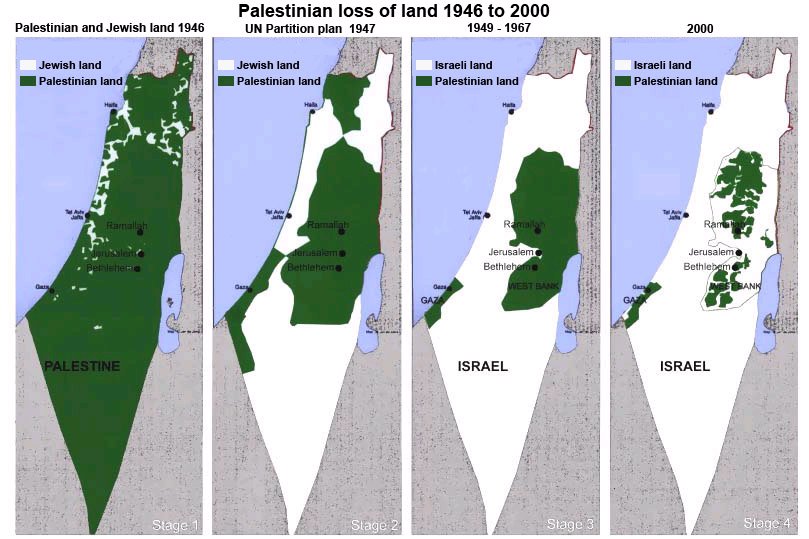
Palestine is just getting worse and worse. Israel has been using a rhetoric of putting Palestinians as terrorists and are using the help and support of the West to continue expanding themselves through the West Bank and Gaza. In spite of the tough measures taken by the Israeli government to continue pushing Palestinians by killing them or displacing them, there are people inside the Jewish community who are totally against the genocide perpetrated towards the Palestinian people. Something that calls my atenttion but that I find quite logical is the fact of most of these pro-Palestine Jews to be old people or, people in their 50s, why? Well, because they are the only ones who have lived a similar situation but under the Nazis. This is something that could be worth thinking, because the acts perpetrated towards Palestinians have no justification whatsover and the international community should push harder for the cause of Palestine, because in the end, they were there first.
In the same tone, I can name many cases similar to the aforementioned, (apart from ny numerous entries about Tibet) everywhere there are minorities who are suffering from a certain kind of authoritarianism or oppression or discrimination just to say the least. Pecisely because the world is more diverse and more connected today, governments should not focus in how to secure their interests by circling them either into zones of influence or by making new countries out of them.
The current international environment requires more conciliation than authoritarianism, because this last one could make people's anger or terrorism to appear on the short or long term. If countries like Spain were able to give their groups (such as Cataluña...let's leave ETA out of this, of all separatists movements, this is the least reasonable I have found) a special status, or other countries (like mine, being the south the most complex) have put laws inside the constitution that protect and respect these minorities, and others have been able to carry out national agenda succesfully not mattering which group is in power (like Malaysia), then it is possible for all groups who live in the same country to live in a stable place. In the end, today it is NOT about international borders, it is about adaptability to diversity.




Comentarios
Publicar un comentario