Gender Equality: A Matter of Choice.
I've been asked many times about the situation of women in both my country and my region. Since I do believe that women's status in every part of the world is a matter relevant to both the international community and to many countries, I would like to spend some sentences inside this entry in order to express a bit of my views regarding this issue. The main categories that could serve to be relevant for analysing a bit about women's status in other parts of the world to me are culture, background and obviously history, of course this is just a bit of many other relevant elements that determine women's situation worldwide.
In the first place, it is important to remind ourselves that human rights are universal and therefore belong to every single person standing on the world, whereas we are talking about a man or a woman, without mattering their origin, ethnicity, religion and so on. It is important to mention that gender equality is inside and is relevant to all issues regarding human rights as a whole. Nervetheless there are ways to acquire or to struggle for these rights to be respected and, in the case of women I believe that unity is the key to achieve equality and also emancipation, I will come back to this later.
The first key element to analyse is the part of background. Every person is born under specific circumstances and in a particular context which for better or for worse determines their mindsets and most of the time, their future. Women are no exception and unfortunately tend to be the most affected ones along with children in what respects to the background they have, for their education and life is determined by it in many places of the world. The part of education is the most if not the essential, part here. Some women have been subject to a certain way of life or have been exposed for their whole life to certain contexts and ideas. Unfortunately in these cases, also social status (or class) does affect in a woman's role inside society when determined by her background.
This can be the case of certain parts of Latin America where women are born in rural societies or in indigenous populations and are thought to be under a specific set of rules but, this has been changing as time goes by. In Asia however, even in places that are considered as 'developed' such as Korea, situation for women is very difficult and their social status does not matter at all, because most of the times they are subject to patriarchal rules and roles (such as having the obligation of giving attention to their husband's family and also the part of bearing children, which is considered a must and not an option).
The part of access to both education and opportunities is also central to this whole issue of being able to look beyond to what backgrounds show. I will come back to the importance of women's role in education in order to change perceptions about them and also of herselves inside their contexts, countries or regions. It is not always possible for women to have equal access to education and, in some writings regarding feminism, particularly those coming from the Western hemisphere, writers do not take the fact of inequality in many places of the developing world into consideration, this is a bit of the reason why the action of France to ban the use of veils or of some Western women to take the position of 'saving them from male repression' by supporting this 'veil ban' backfired because some women from Muslim countries argued that the veil is part of their identity and therefore, these actions could serve more of a proof of intolerance rather than of progression. This brings me to the part of culture, which is also a determinant factor inside this matter of gender equality.
Culture is a complex set of norms, values, traditions and of every single trait (such as language) that identifies a nation or a group of people in every part of the world and sometimes can be related to other elements that interact with it (but that do not define it) such as religion. In the case of women, culture can play a positive or a negative role, it depends on the observer's point of view because for some what it is done in India with women who widow or the rough issue of abortion in some parts of Latin America is wrong but for others could be reasonable, everything depends on the glass through which one observes things. In many cases, people tend to confuse culture with religion and start putting stereotypes into certain lifestyles, and this is the case of Muslim women and, actually their situation cannot be labeled as the same in the whole Middle East region. In some countries they do have the right to work and access to education nevertheless, as the examples of driving license ban in Saudi Arabia or the whole issue around Malala have shown, the social context still has a long way to go, because there are women who have opposed such measures or impositions being put on them. I would put the issue of social status into question here, because in some parts of the Middle East such as the United Arab Emirates, one does see wealthy women being dressed in the Western way or with very short skirts and those who are not coming from such backgroud use hijab and niquab.
Now, there are extremes: In the case of Afghanistan we have the typical case of the rules given by the Holy Q'uran as twisted because the Q'uran explicitly states that women must never be subject to such draconian and absolutely deplorable measures like those promoted by the Taliban. The fact of violating essential human rights such as the right for life and freedom under the basis of religion is not a matter only for woman to fix but for the human race as a whole, because we must remember that values and universal ethics go beyond religion.
The part of what women have experienced is also very relevant in order to analyse their current situation because in the end, present events are determined by the past. Women worldwide have experienced different situations throughout history and their current status is the result of past events and also of past decisions. The fate of many women around the world has been shaped and defined either by wars, revolutions and also by occupations. Present events also help to shape women's lives and even their roles as well as the way in which they respond to the context around them.
In Europe women struggled for their rights and also for equality as a reaction to the political and economic changes being given in their sorrounding context, which was changing rapidly thanks to the Industrial Revolution and later by the two world wars. In Latin America, women are still in the way of struggling for equality in many spheres of life, such as equal access to work, salaries, education and even politics but, in this region women are also subject to fight for their personal security to be respected and also to change the particular male dominated mindsets still prevalent in the region. In Mexico, many laws have been enacted in order to promote personal security, such as the 'no more tears' law that now punishes men who touch women in public transport or, seventy years to life long sentence for murder or rape. These laws came as a reaction of women's claims for lacks of respect they were subject to in public transport and the other ones came thanks to the still present situation of women being murdered in Juárez City (northern Mexico, located in the province of Chihuahua. Here even aggressive self defence is allowed). Women such as Dilma Rouseff (President of Brazil) or Michelle Bachelet (President of Chile) are examples of Latin America going forward in this route to equality.
Women in Africa and Asia, as well as in the Middle East are also in the way of trying to achieve equality through people like Malala or like Ellen Johnson as the President of Liberia. Japan has been issuing new policies regarding gender quality in which obeying to the necessity of being more productive, women must now be given facilities inside their working places (such as day care services) in order to work and also give attention to their children. The Japanese government has also issued a new law in which there has to be at least one woman in high ranked positions inside companies.
Background, culture and history are just three of the many categories by which we can analyse the part of gender equality however, these three also include many more. I would like to highlight that gender equality, apart from being directly related to basic human rights, it depends on women to make them to be respected and to be obeyed and guaranteed by their governments, because it is always easy to blame men for the situation regarding women's position and just accept the fate as it is. Men are NOT our enemies, they are our allies and they can also be our life long companions, with whom we share and enjoy everything. We are not supposed to suffer with or under them.
Women deserve to be respected and have the right to happiness like all human beings therefore, we can start to change things inside our society by first teaching our male children that women are equal to them and stop attitudes of 'clean/cook for your father/brother' or stop the outdated attitude of putting marriage and maternity as the ultimate goals in life for women or believing that we are not complete without a man or without being mothers. Educating our children differently can produce great outcomes such as stopping violence. We can be business women, pilots, air traffic controllers, diplomats, presidents...and even heavy metal singers, why not?
We have to be aware of the importance of unity to achieve equality, because in the end it has been unity what has made the State to give rights and guarantees to women worldwide, but it also depends on us to stop accepting impositions and roles that others want us to perform in these days. Gaining respect, security and rights depends on us and let's not forget that education constitutes the best self defence weapon for all of us and that puts us in the possibility of empowering those around us. Never forget that, as symphonic metal singer Lisa Middelhauve said to me in an interview about the role of women inside metal: "It seems unfair that these days so many women (in music) still have to
fight for the very basic rights of a woman, but I think it is a fight worth
fighting and I'm doing what I can to support women everywhere, at least with
showing them that it's possible to be strong and emancipated - and still loved." (Lisa Middelhauve, 2012)
 |
| Michelle Bachelet (President of Chile) |
 |
| Aung San Suu Kyi (Politician in Myanmar) |
 |
| Tarja Turunen (former singer of symphonic metal band Nightwish) |
 |
| Lisa Middelhauve (symphonic metal singer) |
 |
| Doro Pesch (first women in heavy metal) |
 |
| Liv Kristine Espaneas Krull (Lead singer of Leaves' Eyes, symphonic metal band) |
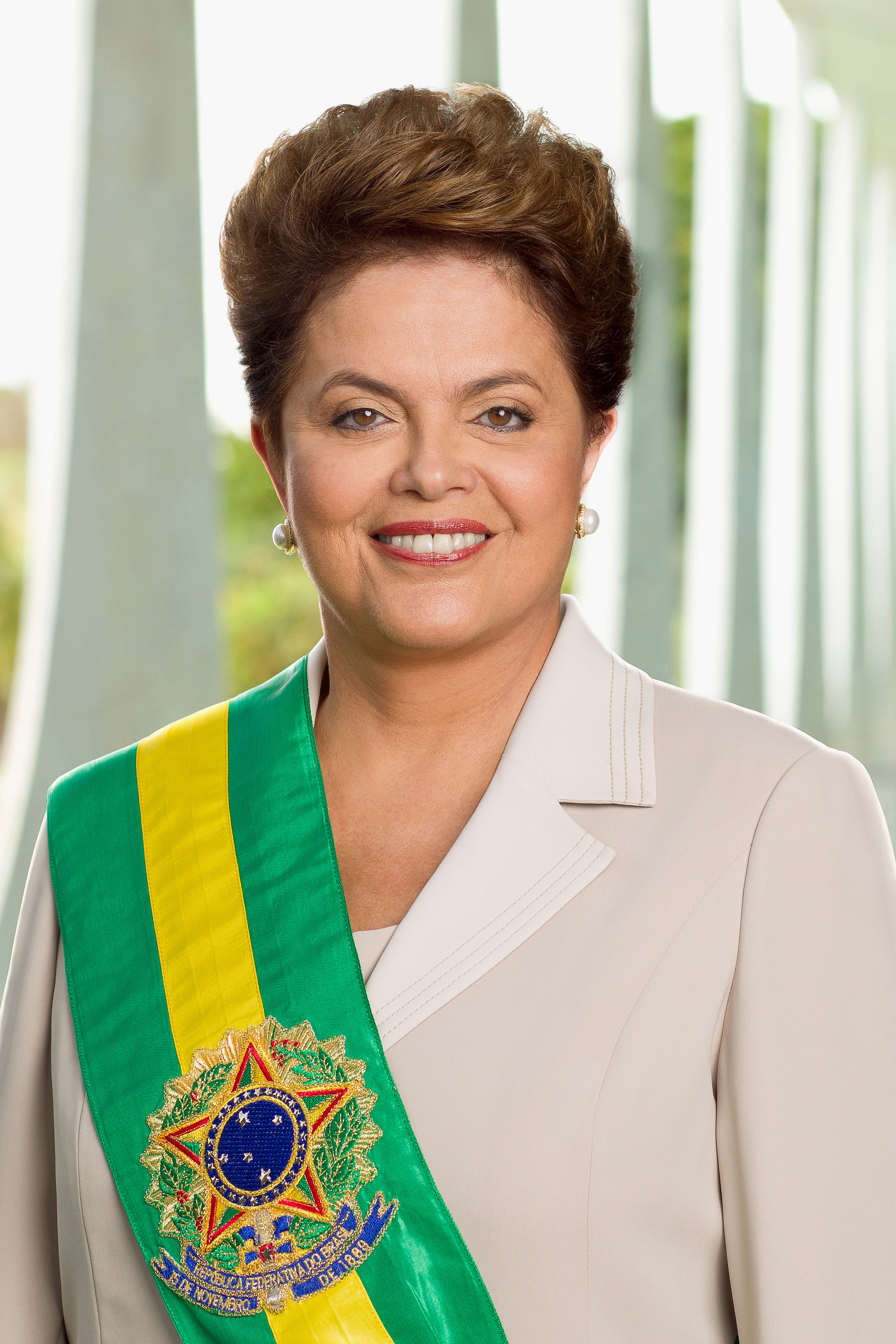 |
| Dilma Rouseff (President of Brazil) |
 |
| María Asunción Aramburuzabala (Business woman, Head of Modelo Group. Mexico) |


Comentarios
Publicar un comentario