Reunification: The (Im)possible Dream in the Korean Peninsula
Korea is one of the few countries on the world that still remains effectively divided and technically, still at war. The issue of the Korean War is very complex in what respects to the actors involved, the events and more importantly, the consequences brought to the peninsula. My Master thesis was about the part of foreign policy on the side of North Korea. I had to dig very deep into history, because North Korean foreign policy cannot be understood without elements such as the nucelar programme and the regime. The North Korean regime at the same time, cannot be understood if their national history is not taken into consideration.
In the middle of my research, I found out that the topic of reunification is a very improtant matter for both countries and at the same time, a hard thing to explore as a foreigner. Taking as a point of reference this idea of reunification, I tried to relate it to North Korea inside my analysis of its foreign policy. This topic is very delicate for Koreans, not all react the same way to it. I saw it first hand, for I had to interview people from all ages about it for my research. I had very impressive views that gave me an idea of how possible or impossible their national reunification can be. I spent a year in Korea and saw the latest events lively. This entry is merely an opinion of how I perceive this issue as a foreigner, but not as an Asian, nor as somebody from the United States. My tendency is to be neutral in this conflict, because it does not involve my country of origin.
To begin with, I notice that history and the ongoing war situation is still present inside Koreans' minds. The city of Seoul and every other city in Korea have a very particular design that obeys to this situation. Subway stations for example, are deep in the ground to serve as shelters, and public buildings have missile detection systems on the top. Curfews in case of attacks are also held regularly in all Korea. People are absolutely aware of it, because whenever alarms start to sound, they know they must run to the nearest shelter. They also know how to differentiate curfews from serious warnings, because when the threat is for real, TV and radio stations stop transmissions and alarms sound all over the cities.
The second aspect I consider relevant is the generaton breach in what respects to the perceptions people have of North Koreans. Elders have a remarkable memory and most remember war episodes, because for them it meant the division of the country, having foreigners on their land and losing their families. In many cases it was deeply painful for them talking about this. Koreans who are over 40 have a very particular opinion about the conflict, they regard the United States as their saviours and believe that North Korea is just another country up there with a crazy leader who just wants to destroy them and North Koreans are different to them. People like the current President, Park Chung Hee correspond to this group. A very remarkable exception on this matter was former President Lee Myung Bak, who stated that 'reunification is inevitable'.
Young Koreans, those below 40 on the opposite, are more diverse on this matter. Some believe that Korea should be unified because North Koreans are suffering and because most believe that they are just like them. This represents an absolute change, because young Koreans have an accurate perception in what respects to sense of belonging and a feleing of common identity. Some expressed concern in the atittudes found towards North Koreans who run away from the regime, because they are discriminated and some feel overwhelmed when living in South Korea. I remember the words of a young Korean who told me: 'I feel for them [North Koreans] the leader has a big belly and people are starving'.
The third most important matter is the business sector. There is a version held in the country that states that the huge amount of savings and money being held by companies are part of a project similar to the one followed by Germany. I do think that Koreais growing a lot in what respects to economy but, they do not cease to be an hermetic nation on many matters. This idea of Korea following the path of Germany could be real at some point, moreover after Former President Bak's declaration cited above and other cooperation projects such as the one given in the Kaesong complex, where North Koreans work inside South Korean companies.
Last but not least, the most important matter in my view, is how much Koreans want reunification. I remember reading a passage in which Kim Il Sung stated that 'Reunification is a Korean issue, therefore it solely corresponds to Koreans to decide this'. I completely agree with this. Whether some academics in South Korea disagree or not, Sung is one of the biggest representatives in what respects to the Korean concept of self-reliance, or the 'chuche' doctrine.

Koreans from both sides have always been subject to trantrums and interests of great powers, formerly Japan, and today China and the United States. All efforts destined to denuclearise North Korea have been failing and, it seems that they will always fall into a vicious cycle of provocation-rise of tensions-pressure to North Korea-negotiation-distension-sanctions and the same all over again. It calls my attention that in every single negotiation table the United States is more present than South Korea, this gives the idea that they have no independent foreign policy opinion (and I did not create this, several young Koreans believe this too) and leave it all for Washington to decide. North Korea is not exempt at all in what respects to dependency. China enters whenenver they feel it is necessary or when they feel the United States is too close to them (like on the last conflict) and have their ways of pressuring and bribing North Korea with food or crushing them with sanctions. Measures of manipulation from these powers are absolutely questionable, but so it is Korean's passive attitude in allowing this.
Korea has a a huge potential for growth,the South side has been showing it. The North, with a tight situation, a big territory and 20 million people living under starvation with an old-fashioned regime, only serves as a buffer zone for China. I believe that if Korea really wants reunification, Koreans and ONLY Koreans should get rid of stereotypes, and great power selfishness, because, as many countries on the world, they are just being used for spheres of influence consolidation. Neither the United States nor China, helped the sides during the war out of altruism. China wanted to keep the United States out, and the latter wanted to keep communism out of the peninsula.
Kim Jong Un said in his inaugural speech that he sought reunification on the long term, if it is of common interest, then why not giving it a try? If Koreans on the North are brave enough to stand such difficult and particular leader (who should use his experience in Switzerland for positive things instead of doing a mess) and the South ones able to perform such positive outcomes on the last years, they could complete each other, because both have something in common: their strong discipline and national pride. These last two things in my opinion, make them stand out of the rest of Asia and could allow them to achieve this dream both countries share of reunification.

In the middle of my research, I found out that the topic of reunification is a very improtant matter for both countries and at the same time, a hard thing to explore as a foreigner. Taking as a point of reference this idea of reunification, I tried to relate it to North Korea inside my analysis of its foreign policy. This topic is very delicate for Koreans, not all react the same way to it. I saw it first hand, for I had to interview people from all ages about it for my research. I had very impressive views that gave me an idea of how possible or impossible their national reunification can be. I spent a year in Korea and saw the latest events lively. This entry is merely an opinion of how I perceive this issue as a foreigner, but not as an Asian, nor as somebody from the United States. My tendency is to be neutral in this conflict, because it does not involve my country of origin.
To begin with, I notice that history and the ongoing war situation is still present inside Koreans' minds. The city of Seoul and every other city in Korea have a very particular design that obeys to this situation. Subway stations for example, are deep in the ground to serve as shelters, and public buildings have missile detection systems on the top. Curfews in case of attacks are also held regularly in all Korea. People are absolutely aware of it, because whenever alarms start to sound, they know they must run to the nearest shelter. They also know how to differentiate curfews from serious warnings, because when the threat is for real, TV and radio stations stop transmissions and alarms sound all over the cities.
The second aspect I consider relevant is the generaton breach in what respects to the perceptions people have of North Koreans. Elders have a remarkable memory and most remember war episodes, because for them it meant the division of the country, having foreigners on their land and losing their families. In many cases it was deeply painful for them talking about this. Koreans who are over 40 have a very particular opinion about the conflict, they regard the United States as their saviours and believe that North Korea is just another country up there with a crazy leader who just wants to destroy them and North Koreans are different to them. People like the current President, Park Chung Hee correspond to this group. A very remarkable exception on this matter was former President Lee Myung Bak, who stated that 'reunification is inevitable'.
Young Koreans, those below 40 on the opposite, are more diverse on this matter. Some believe that Korea should be unified because North Koreans are suffering and because most believe that they are just like them. This represents an absolute change, because young Koreans have an accurate perception in what respects to sense of belonging and a feleing of common identity. Some expressed concern in the atittudes found towards North Koreans who run away from the regime, because they are discriminated and some feel overwhelmed when living in South Korea. I remember the words of a young Korean who told me: 'I feel for them [North Koreans] the leader has a big belly and people are starving'.
The third most important matter is the business sector. There is a version held in the country that states that the huge amount of savings and money being held by companies are part of a project similar to the one followed by Germany. I do think that Koreais growing a lot in what respects to economy but, they do not cease to be an hermetic nation on many matters. This idea of Korea following the path of Germany could be real at some point, moreover after Former President Bak's declaration cited above and other cooperation projects such as the one given in the Kaesong complex, where North Koreans work inside South Korean companies.
Last but not least, the most important matter in my view, is how much Koreans want reunification. I remember reading a passage in which Kim Il Sung stated that 'Reunification is a Korean issue, therefore it solely corresponds to Koreans to decide this'. I completely agree with this. Whether some academics in South Korea disagree or not, Sung is one of the biggest representatives in what respects to the Korean concept of self-reliance, or the 'chuche' doctrine.
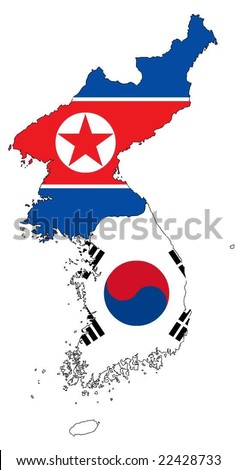
Koreans from both sides have always been subject to trantrums and interests of great powers, formerly Japan, and today China and the United States. All efforts destined to denuclearise North Korea have been failing and, it seems that they will always fall into a vicious cycle of provocation-rise of tensions-pressure to North Korea-negotiation-distension-sanctions and the same all over again. It calls my attention that in every single negotiation table the United States is more present than South Korea, this gives the idea that they have no independent foreign policy opinion (and I did not create this, several young Koreans believe this too) and leave it all for Washington to decide. North Korea is not exempt at all in what respects to dependency. China enters whenenver they feel it is necessary or when they feel the United States is too close to them (like on the last conflict) and have their ways of pressuring and bribing North Korea with food or crushing them with sanctions. Measures of manipulation from these powers are absolutely questionable, but so it is Korean's passive attitude in allowing this.
Korea has a a huge potential for growth,the South side has been showing it. The North, with a tight situation, a big territory and 20 million people living under starvation with an old-fashioned regime, only serves as a buffer zone for China. I believe that if Korea really wants reunification, Koreans and ONLY Koreans should get rid of stereotypes, and great power selfishness, because, as many countries on the world, they are just being used for spheres of influence consolidation. Neither the United States nor China, helped the sides during the war out of altruism. China wanted to keep the United States out, and the latter wanted to keep communism out of the peninsula.
Kim Jong Un said in his inaugural speech that he sought reunification on the long term, if it is of common interest, then why not giving it a try? If Koreans on the North are brave enough to stand such difficult and particular leader (who should use his experience in Switzerland for positive things instead of doing a mess) and the South ones able to perform such positive outcomes on the last years, they could complete each other, because both have something in common: their strong discipline and national pride. These last two things in my opinion, make them stand out of the rest of Asia and could allow them to achieve this dream both countries share of reunification.


Comentarios
Publicar un comentario