Peace after the Political Storm?
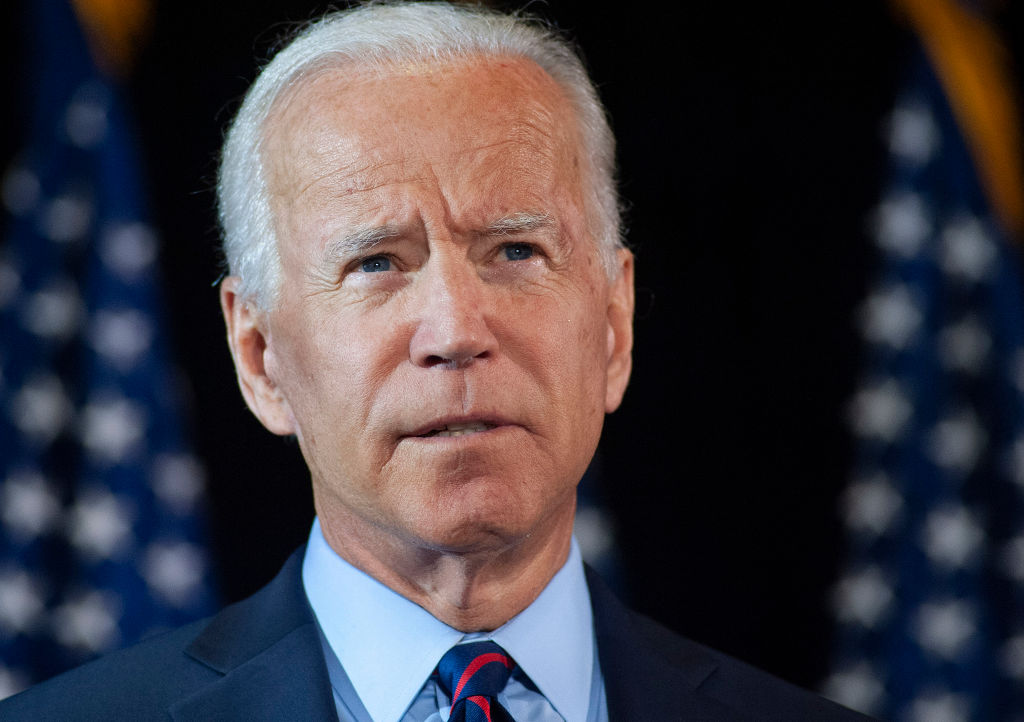
My blog has not had any entries in English for a long time, but in view of the recent events regarding the elections in the United States and how this has shaped attitudes and reactions around the world, I thought it would be worth putting some thoughts about this as a Mexican who is a specialist in China, Japan and Korea. The first relevant point to discuss in this entry is the role of the United States as one of our most important neighbours, and how the election of Biden represents a breathing space for Mexico but not necessarily a success.
Secondly, how encounters and arguments during the Trump administration determined relevant discussions inside Mexico and how this is related to priorities on domestic grounds. Third, it is important to clarify and debunk the myth surrounding Biden as a ‘pro-socialist’, ‘leftist’ or as a ‘communist’ by some members of the Latin American community in the United States and elsewhere, (particularly Cubans and Venezuelans) as this concept is opposite to everything the United States of America has preached and represented for years. Fourth, I will address the part of China briefly as it is highly unlikely that the tone will be changed drastically (as some have argued), however there is a difference between being conciliatory from being permissive or submissive.
Lastly as a concluding remark, I argue that Biden’s administration does represent a change after four tense years in which Mexico, China and other countries (and groups) where used as targets to divert attention or to strengthen the legitimacy of Trump’s actions and discourses. This change however, has its advantages and disadvantages as in my view, one of the reasons behind Trump’s success is the satiety of being governed by the American elite and the establishment. It is these actions and attitudes that Biden (and both Republicans and Democrats) should modify or change, at least in substance to avoid previous (and costly) mistakes.
Mexico’s bilateral relations with the United States have always been filled with arguments, agreements and controversies, however in view of the vicinity, both countries have tried to remain on conciliatory grounds. The space of this entry is not enough to name and explain the history of U.S and Mexico relations, but in terms of discourses used by U.S. politicians towards Mexicans in shaping the image of ‘the other’, the adjectives used by President Trump could be compared (among others) to those used by President James Polk during the U.S.-Mexico war in the nineteenth century (with different words).
The Mexican Ministry of Foreign Affairs had a difficult time dealing with Trump’s discourses during the four years of his administration added to the related consequences of these. The role of Mexicans as one of the major sources of immigration in the United States made them vulnerable to attacks and turned them into targets with these discourses but, despite the presence of right wing groups that have echoed these ideas for years, there is a wide gap between a group supporting these discourses as opposed to a Chief of State using them. In many ways, President Trump broke a long tradition of conciliatory notes between Mexico and the United States even with the presence of hard core beliefs in the White House that are not favourable to Mexico’s position.
Mexico came across with a difficult leadership because of the strong economic integration with the United States. Trump’s ‘America First’ policy represented a challenge for its neighbour mainly because of its unpredictability and the claims to renegotiate the NAFTA agreement. It is relevant to mention that the treaty (originally signed in 1992 and started until 1994) did need a reformation and further discussions on several sections, moreover after China entered to the WTO, the processing of some goods, additional regulations around tariffs and taxes and how markets and policies have evolved.
Both Mexico and Canada were pushed to address these matters and negotiate those practices that the Trump administration considered as damaging to the U.S. industry (issues that were also imposed to the European Union for discussion). In Mexico’s case, the part of national security was also heavily hit by the expectations from the Trump administration, as it turned into a game of blame rather than a plan to address safety concerns from both countries. There are high expectations around how both countries will negotiate these sensitive and urgent issues during the forthcoming years.
In view of the extremes represented by the Trump administration as opposed to the points exposed during Joe Biden’s campaign, there were some concepts and ideas that were attached or related to Democrats thanks to the presence of candidates such as Bernie Sanders and Alexandria Ocasio-Cortez. During the campaign and election process, there were widespread concerns regarding Biden’s platform and ideas as ‘socialist’ or ‘pro-communist’ in the worst cases, and in many cases, these concerns came from Latin Americans who fled their countries with these (or similar) systems. The political history of the United States shows that doctrines related to the left wing paradigms have not been strong enough (or buried deep roots, at least) to have some sort of political influence in the country, not even during the riskiest but suitable times represented by the Cold War.
Republicans and Democrats share similarities and each of them with their variants (like the presence of the Tea Party and others), but both belong to the same political spectrum. The idea of Biden being a communist or a socialist is far-fetched and in many ways, unfounded. It would be advisable however, to draw a line between of what represents a right and what represents a privilege, and the truth is that whatever people have access to (education, health, public services, housing, etc) as opposed to the lack of, is a privilege. Granting essential rights to others is not ‘socialism’ or ‘communism’, it is a matter of human dignity (the ‘I pay my taxes’ argument is a matter of a system that should be transformed to address all needs in an equitable way where society contributes for the common good). The crisis caused by the Covid pandemic in the United States (and elsewhere in the planet) should serve as a proof strong enough to demonstrate the importance of efficient services and universal (or affordable) healthcare access.
Now after mentioning communism, in terms of Biden’s tone around China, it is highly likely that there will be further measures and impositions against Xi Jinping not only in economic terms, but also on ideological ones. Since Biden belongs somehow to the American establishment, it is possible to look for a conciliatory alternative that does not affect or impact the U.S. economy without necessarily being permissive or submissive to China. Trump in many ways represented what is expected from politicians: it is not about the truth or the facts but rather about how you are exposing your ideas and telling people what they want to hear.
China as a non-democratic country keeps on representing a problem to the Western mindset in terms of its success as something unique that did not imply democracy and orthodox capitalism as its foundations for progress so, many of the reservations against China that prevail in the United States are also ideological. It is essential therefore, to have an efficient and discrete strategy (like that adopted by some European countries) rather than just words and complaints against China’s trade practices. It is undeniable that the discussion of the consequences of the impact of the pandemic in how it was managed cannot and should not remain in the air (the management of the Covid in China was addressed in previous entries), and the same goes for discussions around the situation of human rights in China (widely explored in this blog).
In conclusion, this entry is a piece of my own thoughts (I do not have the answers to everything) around the change in the White House and how this could impact some of the most important aspects. The space in this blog is insufficient to discuss these matters in detail, as the Mexico-U.S. relation is complex and implies getting into other areas, same in the case of China. Biden’s triumph represents a breathing space of many countries (particularly for Mexico) but this change will also bring further challenges, discussions and high expectations, as for some Biden represents that part of the U.S. political system that has remained intact for many years. Now, the hardest challenges for the United States undeniably lies on repairing domestic fractures that became gorges thanks to the social erosion of these four years.
 |
| Xi Jinping (President of China) with Joe Biden (c) New York Post |
 |
| (c) Time Magazine |


Comentarios
Publicar un comentario