Historical Memory: A National Treasure
First of all, I am sorry for taking so long to write again. Working as a full time researcher and trying to get into a university for studying my PhD, has been keeping me quite busy. I barely have time to listen to my thoughts now. Now, let's go to the substantial part of this entry.
In the frame of the 25th Anniversary of Tiananmen Massacre, the elections in Egypt, the crisis in Ukraine and the ongoing problems in my homeland and elsewhere, I decided to write about an issue that is important to all nations and peoples on this world: historical memory. Up to this point, and after meeting many people from nations and regions that I never imagined I would ever come across with, I have seen certain patterns in some of them that have either conducted them to development and progress or, on the opposite, that have led them to disaster and, condemned them to an under developed status for a long time.
The main idea in the whole concept of historical memory, in my view, is based on the paradigm of Historical Sociology, which emphazises the importance of the past translated in key facts or developments which determined certain outcomes inside the destiny of a nation or, of a group of people. History is a key element for the members of a nation in the role they have of building their future and most importantly, in deciding what is best for them. Historical Sciology is not only important for the discipline of social and human studies, but also for international relations. The fact of uneven development in some countries around the world obeys to how members of the nations have been able to deal with internal difficulties and, also cope with external ones.
The main factors that determine the role and the importance of historical memory are mainly cultural, because the importance of not making the same mistakes all over again depends on the nation, but it depends more on people's mindset. In certain places, history is taught in a preemptive way in such way that people (sometimes quite harshly) are told not to do something that led the nation to failure or to any other inconvenient situation, both in the national or the international level. The best example of this is how Germany teaches children the episode of the Nazis and the Holocaust.
The other way of teaching history is by just exposing key facts that give people an idea of what happened in their past just for matters of culture and knowing their origins, which is the most common way all over the world. Nevertheless, here the role of the State is essential, for it has the main responsibility in what respects to the content of what is taught and what children read in history books.
The State sometimes seeks to perpetuate certain ideas in order for people to have a specific mindset and a specific view of their nation and of their past. In some cases, they go to the extremes: North Korea and South Korea have in common the fact of making their people blame Japan for everything that happened to them and also for the peninsula's division, this is why every year South Korea constantly reminds the world about the raped women during the Second World War, and also why China gets upset with the issue of Yatsukuni Shrine, as well as supporting protests against anything that is Japanese (including companies). There is no justification for atrocities, and I am not, by any means, justifying Japan's acts however, a very important part of achieving progress is getting over things.
This tactic is also quite common in Venezuela, where the Chavez regime used to blame the USA for everything that happens in the region, when actually, they are of the main oil partners of the United States. This is something that many leftists in Europe and elsewhere do not understand, because there are many cultural things involved here (i.e. for some of them 'the fact of helping the poor is amazing' yes, but on the expense of others, let's say middle classes, or that 'the protesters ara fascists because they are white and rich' as if the ones who left the country due to State terrorism, or threats, or just because they worked hard do not have a voice just for the mere fact of being such.'giving money to the poor is great' yes sure, being lazy is a regional problem, and trust me that getting money without working or doing any kind of effort is everybody's dream , the problem is inflation).
In the same stance, in Latin America in spite of the atrocities committed by Spain during colonisation (of which most in the region are aware), all countries in general have friendly relations with Spain. Many people in Latin America still keep some hatred feelings towards Spanish but, most here are aware of the role of national destiny as an outcome that ONLY depends on the countries and their people (not the colonisers). It is quite out of the question to blame colonisers for what is happening in the countries now. In summarised terms: after independence, anything that happens in the country IS because of what the decisions made by the locals.
It is true that Imperialism has been a big obstacle for this and other regions, but this argument misses out that in order to allow intervention and being crushed, there must be two sides: the one who invades and exploits AND the one who allows it in the country. Let's not forget that the US backed companies and parties in Latin America were helped by factions of locals (i.e. Chicago Boys, the Somoza, right wing in Mexico, and to some people's dismay, Venezuela etc.).
If we apply this elsewhere, I have wtinessed in very first hand, how Indians and Pakistanis continue blaming the United Kingdom for their problems, in some cases they even say 'they are developed countries because they are white', the fact of indirectly putting themselves as inferior is no help at all when trying to get the country going and trying to solve the issue of Kashmiris who are always in between the sword and the wall, divided by extreme views and the lack of vision in what they want for themselves.
In certain countries historical experiences have served for people to awaken and deal with their problems in order to get rid of obstacles for development, this is the case of many countries of Eastern Europe, of Finland, Germany, Japan and the case of Tibet, among others. It is quite depressing to accept that pain, oppression and wars are something that make people value what they have and also look for positive outcomes in everything they do and most importantly, pressuring the State to carry out such actions.
The fact of people in China and outside China doing activism (and I mean the real one, not just spending your time criticising governments and armies without knowing anything in general. If one wants to change the world, then we have so start by putting the example), has made the world to be aware of what is behind China's economic growth. Exposing Tiananmen to the world and to Chinese people (and intimidating and making the CCP angry), is of the upmost importance if Chinese want a more open country with more human rights guarantees. Tibetans (His Holiness the Dalai Lama included) have been doing an outstanding job with their actions, because in both senses activists have been congruent with what they say and what they do.
It will always be better to promote change from the inside, because activists of foreign origin are not of much help most of the times, moreover when national issues go beyond their understanding. If people of a nation want a change, they will go for it sooner or later, if they want to stay in their comfort zone, then it does not matter if foreign activists spend their time convicing them about change. Conformism (including the allowance of things that deteriorate the country, such as corruption) is also part of certain cultural behaviours. We should also remember that before dedicating ourselves to save the world, first we should give three turns and clean the mess inside our own houses.
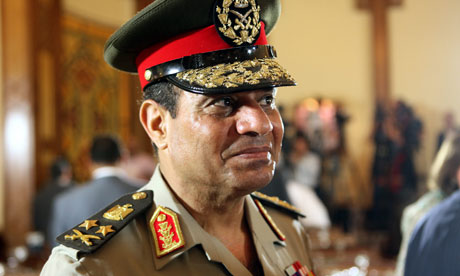
Nobody on this world has been free of problems, nevertheless the biggest threat to a nation or to a group of people is the lack of historical memory. In some countries, historical unawareness has made them to make the same mistake all over again (which seems to be what Egypt is about to do). Anyway, it depends on oneself whether we want to make a change, or just stay in our comfort zones. In my view, being a good citizen is a good way to start making a change, this is: working hard, and complying with very basic obligations such as having respect for others. Do not forget that governments are a reflection of people!




Comentarios
Publicar un comentario